In today’s digital-first world, having an online presence is no longer optional—it is essential for business growth. Customers search online before making purchasing decisions, compare brands on social media, read reviews, and expect businesses to provide a smooth digital experience.
But simply being online is not enough. Businesses need the right digital marketing strategy to reach the right audience, build trust, generate leads, and turn visitors into customers.
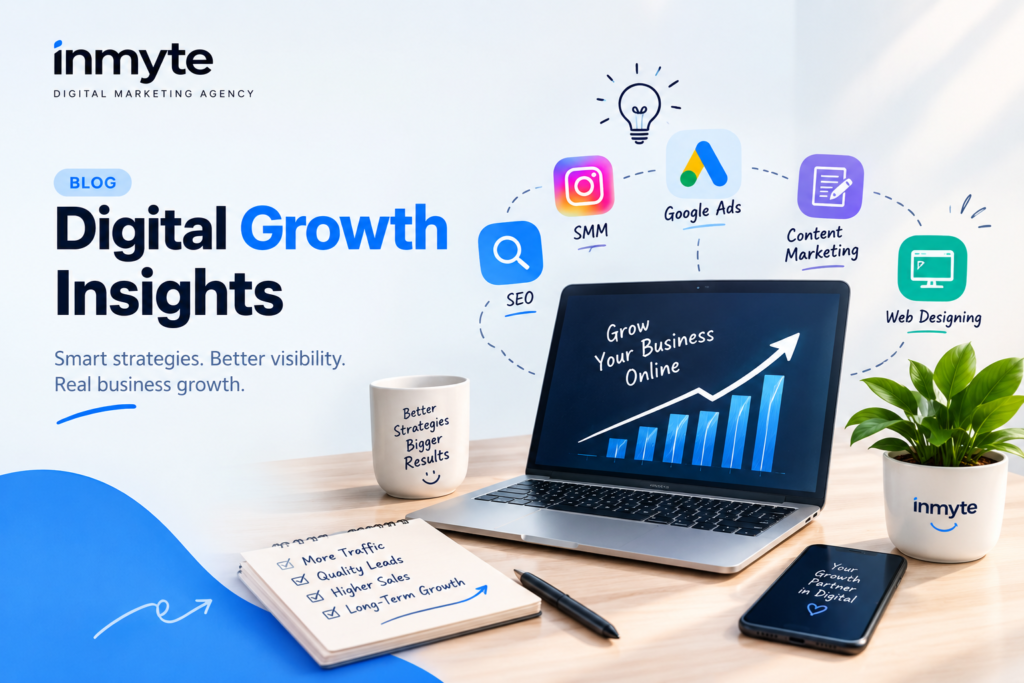
At Inmyte, we believe digital growth comes from combining the right strategies with creativity, consistency, and a clear understanding of your audience. From SEO and social media marketing to Google Ads, content marketing, and web designing, every part of your digital presence can contribute to sustainable growth.
Why Digital Marketing Matters for Business Growth
Digital marketing allows businesses to connect with potential customers where they spend much of their time—online.
A strong digital marketing strategy can help your business:
- Increase online visibility
- Reach a more relevant audience
- Build brand awareness and credibility
- Generate quality leads
- Increase website traffic
- Improve customer engagement
- Drive sales and conversions
- Build long-term customer relationships
Whether you are a startup, local business, growing company, restaurant, or established brand, the right digital strategy can help you compete more effectively in the modern marketplace.
1. SEO: Build Long-Term Online Visibility
Search Engine Optimization (SEO) helps your website appear more prominently when people search for products, services, or information related to your business.
Unlike paid advertising, SEO focuses on building organic visibility over time. It involves optimizing your website, content, technical structure, keywords, and overall user experience.
An effective SEO strategy can include:
- Keyword research
- On-page optimization
- Technical SEO
- Content optimization
- Local SEO
- Website performance improvements
- Internal linking
- Quality backlink strategies
The goal is not simply to attract more visitors. The goal is to attract the right visitors—people who are genuinely interested in what your business offers.
2. Social Media Marketing: Connect With Your Audience
Social media has transformed the way businesses communicate with customers. Platforms such as Instagram, Facebook, LinkedIn, and other social channels provide opportunities to showcase your brand, educate your audience, and create meaningful relationships.
A successful social media strategy should focus on more than posting regularly. Every post should have a purpose.
You can use social media to:
- Increase brand awareness
- Showcase products and services
- Share valuable content
- Engage with customers
- Build a recognizable brand personality
- Generate leads
- Drive traffic to your website
Consistency is important, but quality and relevance matter even more. Understanding what your audience wants to see can help your content create stronger engagement.
3. Google Ads: Reach Customers With Intent
When customers are actively searching for a product or service, Google Ads can help your business appear at the right moment.
Paid search campaigns allow businesses to target specific keywords, locations, audiences, and customer intentions. This makes Google Ads a powerful tool for businesses looking for faster visibility and measurable results.
A successful Google Ads campaign requires careful planning, including:
- Selecting relevant keywords
- Creating compelling ad copy
- Choosing the right audience
- Setting appropriate budgets
- Optimizing landing pages
- Tracking conversions
- Regularly analyzing campaign performance
The objective should not be to spend more on advertising. It should be to make every advertising investment more effective.
4. Content Marketing: Give Your Audience a Reason to Choose You
Content is one of the most powerful ways to communicate your expertise and build trust.
From blog posts and website copy to social media posts, guides, videos, and educational resources, valuable content can help your business answer customer questions and demonstrate what makes your brand different.
Good content should be:
- Useful
- Relevant
- Original
- Easy to understand
- Focused on customer needs
- Consistent with your brand
Instead of constantly asking customers to buy, content marketing gives them information that helps them make better decisions. Over time, this can strengthen trust and position your business as a reliable source of information.
5. Web Designing: Turn Visitors Into Customers
Your website is often the first major interaction a potential customer has with your business.
A visually attractive website is important, but design should go beyond appearance. A successful business website should provide a smooth experience and make it easy for visitors to understand your services and take action.
An effective website should have:
- Clean and modern design
- Simple navigation
- Mobile responsiveness
- Fast loading speed
- Clear calls-to-action
- Easy-to-read content
- Strong visual hierarchy
- Trust-building elements
- User-friendly contact options
Your website should answer three important questions quickly:
Who are you?
What do you offer?
Why should customers choose you?
When these answers are clear, your website becomes more than an online brochure—it becomes a powerful business growth tool.
The Power of Combining Digital Marketing Strategies
The biggest digital marketing opportunity often comes from combining different channels rather than depending on just one.
For example, SEO can bring organic traffic to your website. Content marketing can educate those visitors. Social media can build awareness and engagement. Google Ads can capture high-intent customers, while a well-designed website can convert visitors into leads or customers.
Think of digital marketing as a connected system:
SEO → Visibility → Content → Engagement → Website → Leads → Growth
When these elements work together, your marketing efforts become more consistent and effective.
How Businesses Can Improve Their Digital Presence
You do not need to change everything at once. Start by identifying where your business currently stands and where the biggest opportunities exist.
Step 1: Understand Your Audience
Identify who your ideal customers are, what they need, what problems they face, and how they search for solutions.
Step 2: Review Your Online Presence
Analyze your website, search visibility, social media profiles, content, advertisements, and customer journey.
Step 3: Set Clear Goals
Decide whether your priority is increasing traffic, generating leads, improving brand awareness, increasing sales, or achieving another measurable objective.
Step 4: Choose the Right Channels
Not every business needs to use every marketing platform equally. Focus your resources on channels that align with your audience and goals.
Step 5: Create Valuable Content
Share information that solves customer problems, answers questions, and demonstrates your expertise.
Step 6: Measure and Improve
Track important metrics such as website traffic, rankings, engagement, leads, conversions, and advertising performance. Use the data to improve your strategy continuously.
Digital Growth Is a Continuous Process
One of the biggest mistakes businesses make is treating digital marketing as a one-time activity.
Search trends change. Customer expectations evolve. Competitors introduce new strategies. Social platforms change their algorithms. Advertising performance can fluctuate.
That is why digital marketing requires continuous learning, testing, optimization, and improvement.
The brands that succeed online are often those that stay adaptable and consistently focus on delivering value to their audience.
Final Thoughts
Digital growth does not happen through one campaign, one advertisement, or one social media post. It comes from building a strong digital foundation and consistently improving how your business connects with customers.
With the right combination of SEO, social media marketing, Google Ads, content marketing, and professional web designing, businesses can create a stronger online presence, reach more relevant customers, and build sustainable growth.
At Inmyte, our goal is to help businesses navigate the digital landscape with smarter strategies and meaningful marketing solutions. Whether you want to improve your search visibility, strengthen your social presence, attract quality leads, or create a better website, the right strategy can turn your digital presence into a powerful growth opportunity.
Ready to take your business further online? Start with a smarter digital strategy with Inmyte.
Frequently
Asked Questions
Digital marketing uses online channels such as search engines, social media, websites, content, and paid advertising to reach potential customers. It helps businesses increase visibility, build brand awareness, generate leads, and drive growth.
SEO improves a website’s visibility in search engine results. By targeting relevant keywords and optimizing website content and performance, businesses can attract more qualified organic traffic and reach customers actively searching for their products or services.
The most effective strategy depends on your business goals and audience. SEO, social media marketing, Google Ads, content marketing, and professional web design can work together to increase visibility, engagement, leads, and conversions.
Businesses can measure performance through metrics such as website traffic, search rankings, social media engagement, leads, conversions, advertising results, and return on investment. Regularly analyzing these metrics helps improve marketing strategies and achieve better results.