Introduction
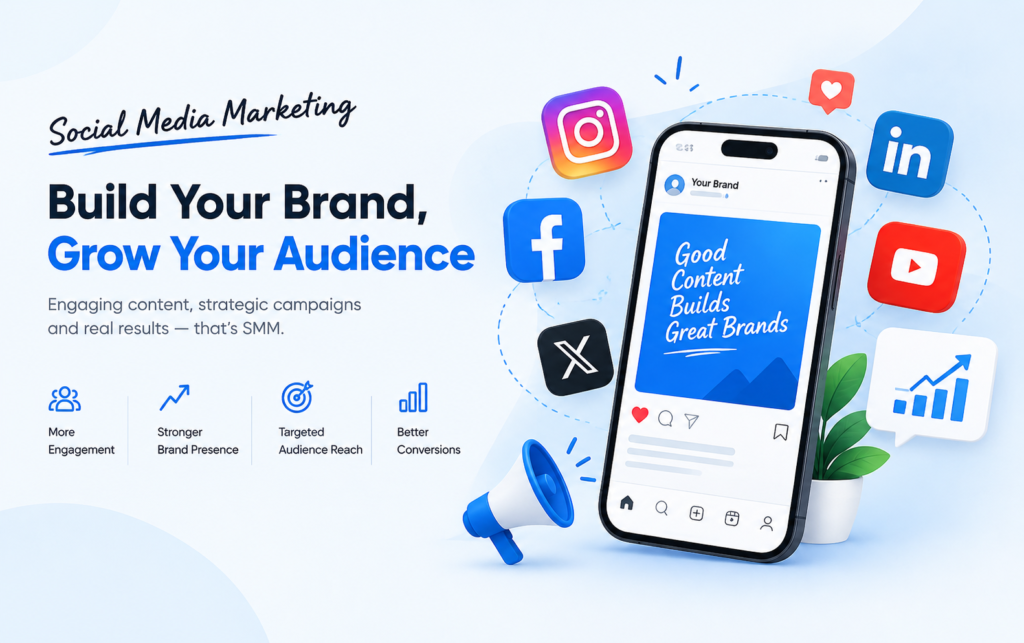
Social media has become an essential part of how businesses connect with their customers. Platforms such as Instagram, Facebook, LinkedIn, and other social networks give businesses opportunities to build awareness, engage audiences, showcase their products or services, and generate new leads.
Social Media Marketing (SMM) helps businesses use social platforms strategically to reach the right audience and build a stronger digital presence.
Whether you are a startup, local business, restaurant, or established company, an effective SMM strategy can help you connect with customers and create meaningful opportunities for growth.
What Is SMM?
SMM, or Social Media Marketing, is the process of promoting a business, product, service, or brand through social media platforms.
It involves creating and sharing valuable content, engaging with audiences, building brand awareness, analyzing performance, and using social media advertising when appropriate.
The goal of SMM is not simply to gain followers. It is about building meaningful connections with the right audience and turning social engagement into business opportunities.
Why Is SMM Important for Your Business?
Millions of people use social media every day, making it an important channel for businesses to communicate with potential and existing customers.
A strong SMM strategy can help your business:
- Increase brand awareness
- Reach your target audience
- Build customer relationships
- Increase engagement
- Generate leads
- Drive website traffic
- Showcase products and services
- Build brand credibility
- Support business growth
Social media also gives businesses an opportunity to communicate directly with their audience and understand their interests, questions, and preferences.
How Does SMM Work?
SMM begins with understanding your business goals and target audience. The next step is selecting the right platforms and developing a content strategy that matches your audience’s interests.
Businesses can then create and publish different types of content, engage with followers, monitor performance, and continuously improve their strategy based on results.
A successful social media strategy combines creative content, consistent communication, audience understanding, and performance analysis.
Key Elements of SMM
1. Social Media Strategy
A clear strategy provides direction for your social media activities. It includes defining goals, identifying your target audience, selecting platforms, planning content, and deciding how success will be measured.
A well-planned strategy helps businesses maintain consistency and focus their efforts on activities that support their objectives.
2. Content Creation
Content is one of the most important parts of social media marketing. Businesses can create posts, images, videos, reels, stories, carousels, educational content, promotional content, and other formats.
Good content should be useful, engaging, relevant, and consistent with your brand identity.
3. Audience Engagement
Social media is not only about publishing posts. It is also about communicating with your audience.
Responding to comments, answering questions, replying to messages, and participating in conversations can help businesses develop stronger relationships with customers.
4. Social Media Advertising
Organic social media can be supported by paid advertising. Social media advertising allows businesses to promote their products and services to specific audiences based on factors such as interests, demographics, location, and online behavior.
Paid campaigns can help businesses increase reach, generate leads, promote offers, and support specific marketing goals.
5. Performance Analysis
Tracking performance helps businesses understand what is working and what needs improvement.
Important metrics can include reach, impressions, engagement, follower growth, website visits, leads, conversions, and advertising performance.
Analyzing these metrics allows businesses to make more informed decisions and improve future campaigns.
Choosing the Right Social Media Platforms
Not every business needs to be active on every social media platform. The right platforms depend on your audience, industry, content, and business objectives.
For example:
- Instagram can be useful for visual content, products, services, and brand storytelling.
- Facebook can help businesses connect with communities and reach a broad audience.
- LinkedIn can be valuable for B2B businesses, professionals, and industry-focused content.
- YouTube can support video-based education, demonstrations, and brand storytelling.
Choosing the right platforms allows businesses to focus their time and resources where their audience is most active.
Benefits of a Strong SMM Strategy
A well-planned social media marketing strategy can provide several benefits.
Increased Brand Awareness
Consistent social media activity can help more people discover and recognize your business.
Stronger Customer Relationships
Regular communication allows businesses to interact directly with customers and build stronger relationships.
Higher Engagement
Creative and relevant content can encourage users to like, comment, share, save, and interact with your brand.
More Website Traffic
Social media content can direct interested users to your website, landing pages, blogs, or product pages.
Lead Generation
Strategic content and social media campaigns can encourage potential customers to enquire about your products or services.
Better Brand Personality
Social media allows businesses to show their personality, values, expertise, and unique approach in a more engaging way.
Common SMM Mistakes to Avoid
Businesses can reduce the effectiveness of their social media strategy by making common mistakes. These include:
- Posting without a clear strategy
- Focusing only on follower numbers
- Publishing inconsistent content
- Ignoring audience comments and messages
- Using irrelevant hashtags
- Creating overly promotional content
- Ignoring analytics
- Using the same content across every platform without adaptation
- Expecting instant results
Successful SMM requires consistency, creativity, audience understanding, and continuous improvement.
How Long Does SMM Take to Show Results?
Social media marketing is a continuous process. The time required to see meaningful results depends on factors such as your industry, audience, content quality, consistency, competition, platform, and marketing goals.
Some campaigns may generate engagement or leads quickly, while building strong brand awareness and an active community can take more time.
Consistent content, audience engagement, and regular performance analysis can help create sustainable social media growth.
SMM vs. Traditional Marketing
Traditional marketing uses channels such as television, newspapers, radio, and print advertising, while SMM focuses on digital social platforms.
One major advantage of social media marketing is the ability to communicate directly with audiences and measure many aspects of campaign performance.
Businesses can also adjust their content and campaigns based on audience response, making social media a flexible marketing channel.
How Inmyte Can Help With SMM
At Inmyte, we help businesses build stronger social media presences through strategic digital marketing solutions.
Our SMM approach focuses on creating engaging content, reaching relevant audiences, increasing brand awareness, and developing meaningful customer connections.
From content planning and creative social media campaigns to audience engagement and performance analysis, we work to create a social media strategy aligned with your business goals.
Final Thoughts
SMM is more than simply posting content on social media. It is about creating meaningful conversations, building brand awareness, connecting with the right audience, and turning engagement into business opportunities.
With the right strategy, creative content, consistent communication, and performance tracking, social media can become a powerful part of your overall digital marketing strategy.
A strong social media presence can help your business remain visible, relevant, and connected in today’s competitive digital environment.
Frequently
Asked Questions
SMM stands for Social Media Marketing. It is the process of using social media platforms to promote a business, connect with audiences, build brand awareness, and generate business opportunities.
SMM helps businesses reach potential customers, increase brand awareness, build relationships, engage audiences, drive traffic, and generate leads through social media platforms.
The best platform depends on your target audience, industry, content type, and business goals. Businesses should focus on the platforms where their potential customers are most active.
Yes. SMM can support lead generation through valuable content, calls-to-action, social media campaigns, advertisements, landing pages, and direct audience engagement.